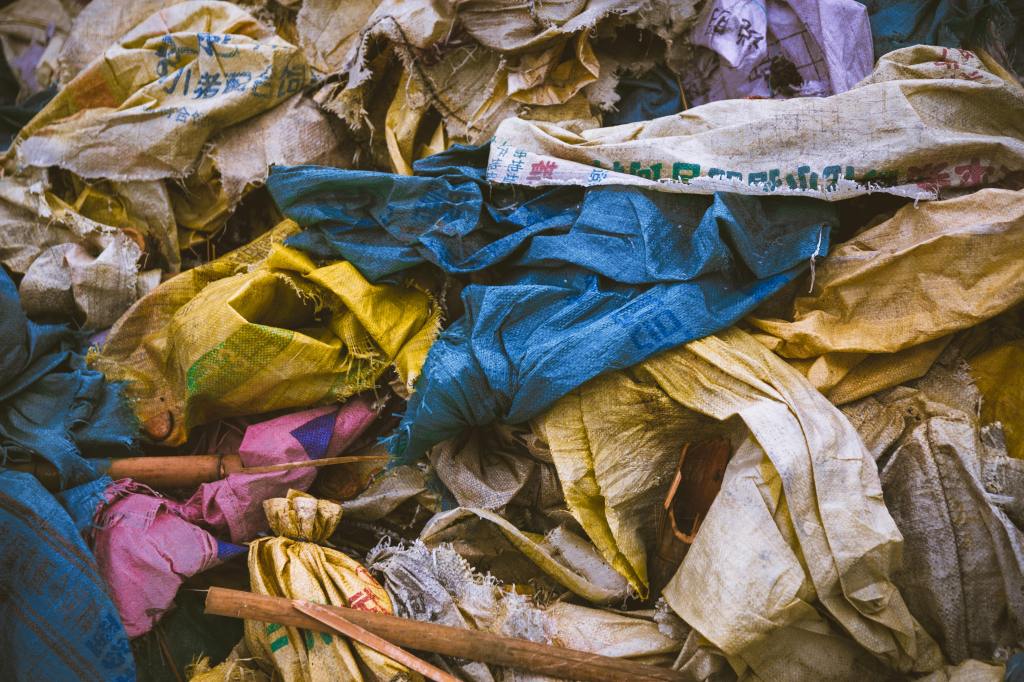
In 2014, Marie Kondo posed the question, “does it spark joy?” That simple question, intended to motivate spatial organization and decluttering, ended up influencing culture as many began to “Marie Kondo” their lives. Those four words offered us a new, mindful way of relating to the objects we surround ourselves with, the articles of clothing we drape on our bodies, and gave us a metric with which we could easily determine whether to hold on to something or get rid of it. Our personal happiness. But what happens to our personal effects that don’t incite warm and fuzzy feelings after we donate them? When it comes to our donated clothing, less than 10% end up in the stores of places like Goodwill and the remaining 90% are resold to textile recyclers. Of that 90%, much of the donated clothing (roughly 75%) will be repurposed or recycled into a variety of industrial products that are then sold back to us, and the remaining 25% will be packaged and sold to developing countries. Shipped offshore, these items are not necessarily finding life inside new wardrobes, they are being discarded in dumps, burn pits and littering the water sources of the towns they end up in. Textile waste is becoming a huge environmental and public health issue.
Mitumba. The Kenyan term for plastic wrapped bales of secondhand clothing (items deemed not “good enough” for either resale here in America or recyclable) are shipped across the ocean to international markets where they are purchase in an attempt to resell the clothing. However, with the rise of fast fashion, and our new proclivity towards “Marie Kondo-ing”, clothing of declining quality has been flooding these international markets, and ending up being disposed of rather than reused or repurposed.
As a consumer, how can you help this growing crisis?
1. Buy Less, Choose Well
Before buying something new, ask yourself: Do I really need this? Will I wear it at least 30 times? Prioritize quality over quantity, and invest in versatile, well-made pieces.
2. Upcycle or Mend What You Own
Give old clothes new life by repairing, dyeing, or repurposing them. You don’t have to be a pro — simple fixes like patching holes or cutting jeans into shorts make a difference.
3. Shop Secondhand First
Thrift stores, vintage shops, and resale platforms like Poshmark or Depop keep clothes in circulation and reduce demand for new production.
4. Avoid “Wishcycling” Your Donations
Before donating, ask: Is this clean, wearable, and useful to someone else? Poor-quality or damaged items often get dumped abroad or in landfills. If it’s not wearable, find textile recycling drop-offs.
5. Support Sustainable and Transparent Brands
If you do buy new, choose brands committed to ethical production, waste reduction, and circular practices. Look for transparency in materials and manufacturing.
Sources:
Durfee, N. (2018, June 6). The troubled second life of donated clothes | Scienceline. Scienceline. https://scienceline.org/2018/06/the-troubled-second-life-of-donated-clothes/
Harden, M. (2019, May 1). The International Impact of Donated Clothing. The Borgen Project. https://borgenproject.org/the-international-impact-of-donated-clothing/
LEE, M. (2006, December 21). The Truth About Where Your Donated Clothes End Up. ABC News; ABC News. https://abcnews.go.com/WN/truth-donated-clothes-end/story?id=2743456
NPR. (2019, January 21). Thrift Stores Say They’re Swamped With Donations After “Tidying Up with Marie Kondo.” NPR. https://www.npr.org/2019/01/21/687255642/thrift-stores-say-theyre-swamped-with-donations-after-tidying-up-with-marie-kond
 Kick In The Pants Studio
Leave a comment